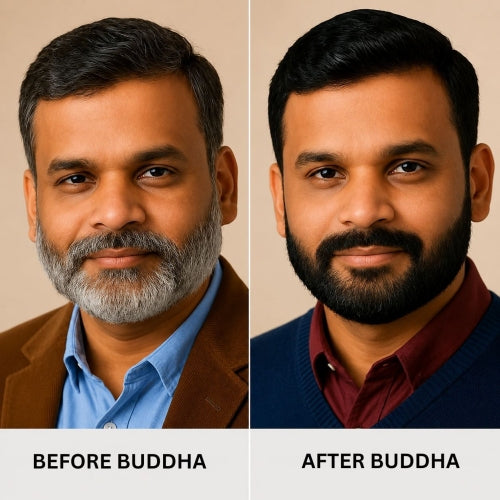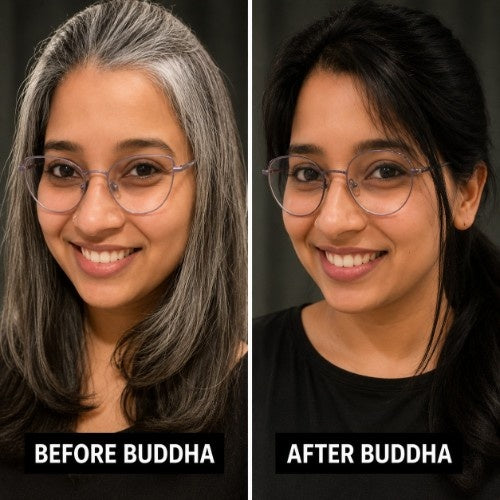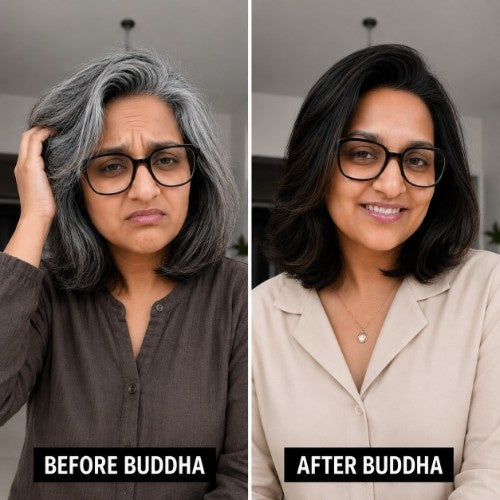

Grey hair is often considered a natural sign of aging. However, when beard hair begins turning grey in the 20s or early 30s, many men become concerned about whether the change is normal or a sign of an underlying health issue. Premature beard greying is increasingly common due to a combination of genetics, oxidative stress, nutritional deficiencies, lifestyle habits, and environmental factors. Although modern medicine has yet to discover a permanent way to reverse genetically programmed greying, research shows that maintaining healthy hair follicles, reducing oxidative damage, and correcting nutritional deficiencies will help support healthier beard hair over time.
Ayurveda also approaches premature greying through the concept of Palitya, which is associated with imbalances in Pitta Dosha, improper diet, stress, and weakened nourishment of the hair follicles. A combination of good nutrition, proper beard care, stress management, and botanical ingredients traditionally used in Ayurveda can help maintain the appearance and overall health of the beard. This guide explains the science behind premature beard greying, when you should seek medical advice, and how a consistent grooming routine—including products such as the Buddha Natural Anti Grey Beard Hair Serum for Men—will help to reduce grey hair, reverse premature greying and improve beard conditioning, hydration, and overall appearance as part of a comprehensive beard care routine.
What Is Premature Beard Greying?
Premature beard greying refers to the appearance of grey or white beard hairs significantly earlier than what is typically expected for a person's ethnic background. Dermatology literature generally defines premature hair greying as: According to commonly used dermatology definitions, premature greying is generally considered to occur before the age of 20 in Caucasians, before the age of 25 in Asians, and before the age of 30 in Africans. These age thresholds help healthcare professionals distinguish normal age-related greying from early-onset or premature greying, which will be influenced by genetics, nutritional deficiencies, oxidative stress, lifestyle factors, or certain medical conditions.
 Qima - Hair Pigmentation Licensed under CC BY 2.0
Because beard hair usually begins developing after puberty, early greying of facial hair often becomes noticeable during the late twenties or early thirties. Grey beard hair develops when melanocytes—the pigment-producing cells inside hair follicles—gradually lose their ability to produce melanin. Once melanin production stops in a follicle, the new hair grows in grey, silver, or white.
Is Premature Beard Greying Common?
Yes. Dermatologists report that premature greying is becoming increasingly common, particularly among urban populations where chronic stress, pollution, irregular sleep, smoking, and dietary imbalances contribute to oxidative stress. However, genetics remains the strongest predictor. If one or both parents experienced early greying, there is a greater likelihood that their children will also develop grey hair earlier than average.
How Beard Hair Gets Its Color
Hair color is determined by two primary pigments:
-
Eumelanin, which produces black and brown shades.
- Pheomelanin, which produces lighter brown and reddish tones.
These pigments are produced by specialized cells called melanocytes, located in the hair follicle. During each hair growth cycle:
- Hair follicles generate new hair.
- Melanocytes inject melanin into the developing hair shaft.
- The hair emerges with its natural color.
As men age—or when oxidative stress damages melanocytes—melanin production gradually declines. The result is the growth of grey or white beard hairs.
Why Does Beard Hair Turn Grey Earlier Than Scalp Hair?
Many men notice that their beard begins greying before the hair on their scalp. Several biological factors will explain this:
- Beard follicles respond differently to hormones than scalp follicles.
- Facial hair has a unique growth cycle.
- Melanocyte activity differs between beard and scalp hair.
- Local oxidative stress will affect beard follicles differently.
Research continues to investigate these differences, but they are recognized as part of normal variation in hair biology.
Common Causes of Premature Beard Greying
1. Genetics (The Most Important Factor) - Genetics is considered the single strongest determinant of premature greying. Specific genes involved in melanin production and follicular aging influence when pigment cells begin to decline. If your father, grandfather, or close relatives developed grey hair early, your beard will naturally follow a similar timeline.
2. Vitamin Deficiencies - Several nutritional deficiencies have been associated with premature greying, including: Healthy hair pigmentation depends on several essential nutrients. Vitamin B12 supports pigment production, Folate promotes hair follicle health, Iron improves oxygen delivery, Copper helps produce melanin, Vitamin D regulates hair follicles, and Zinc supports cellular repair and healthy hair growth. A healthcare professional can recommend appropriate testing if deficiencies are suspected.

TSHA - Premature Grey Beard Licensed under CC BY 2.0
3. Oxidative Stress - Oxidative stress occurs when free radicals overwhelm the body's natural antioxidant defenses. Scientific studies suggest that excessive oxidative stress damages melanocytes, reducing their ability to produce melanin. Common contributors include:
- Air pollution
- Smoking
- Chronic inflammation
- Poor diet
- UV exposure
- Psychological stress
4. Chronic Psychological Stress - Although stress does not instantly turn hair grey, prolonged stress will contribute to oxidative damage and affect the stem cells involved in hair pigmentation. Animal studies have demonstrated that severe stress can deplete melanocyte stem cells, though more human research is needed.
5. Smoking - Multiple studies have found that smokers are more likely to develop premature greying compared with non-smokers. Smoking increases oxidative stress throughout the body and will accelerate follicular aging.
6. Medical Conditions - In some cases, premature greying will be associated with underlying medical conditions, such as:
- Vitamin B12 deficiency
- Iron deficiency
- Thyroid disorders
- Autoimmune diseases
- Rare genetic syndromes
If greying develops suddenly or is accompanied by hair loss or other symptoms, a medical evaluation is advisable.
Age Distribution of Premature Beard Greying:
While genetics strongly influence the timing of beard greying, studies suggest the following general pattern: Grey beard hair can appear at different ages for different reasons. Under 20, it is rare and is often associated with genetics or certain medical conditions. Between 20–25, early greying is more likely in people with a strong family history. Around 26–30, scattered grey beard hairs will become noticeable. From 31–40, grey beard density gradually increases, while after 40, progressive beard greying is considered a normal part of the aging process. These ranges are general observations and individual experiences vary widely.
Typical Progression Timeline (Educational):
The progression of beard greying differs from person to person. A generalized educational timeline is shown below: Grey beard hair usually develops gradually over time. In the initial stage, you will notice one or two isolated grey hairs. Over the following months, small clusters often appear near the chin or sideburns. Within 1–3 years, the beard will have a mix of pigmented and grey hairs. After several years, the proportion of grey hairs typically increases, depending on genetics and the natural aging process. This timeline describes the natural course of beard greying and should not be interpreted as the expected outcome of any cosmetic product.
Risk Factors
Several factors will increase the likelihood of premature beard greying:
- Family history
- Smoking
- Chronic stress
- Poor sleep
- Nutritional deficiencies
- Oxidative stress
- Certain medical conditions
- Environmental pollution
Addressing modifiable lifestyle factors will support overall hair health, even though genetic predisposition cannot be changed.
Dermatologist Perspective
Dermatologists emphasize that premature greying is usually not a disease but a biological process influenced primarily by genetics. However, they recommend evaluating individuals with unusually early or rapidly progressive greying for treatable conditions such as vitamin deficiencies or thyroid disorders.
Published reviews by dermatologists, including Dr. Kavita Poonia and Dr. Mala Bhalla, highlight the role of oxidative stress, genetics, nutritional status, and environmental influences in premature hair greying.
Can Premature Beard Greying Be Prevented?
Complete prevention is not always possible, especially when genetics is the primary factor. However, healthy lifestyle habits will help support normal hair follicle function:
- Eat a balanced diet rich in vitamins and minerals.
- Avoid smoking.
- Manage chronic stress.
- Get adequate sleep.
- Protect your beard from excessive sun exposure.
- Use gentle, nourishing beard-care products.
- Seek medical advice if greying occurs very early or is accompanied by other symptoms.
Supporting Beard Health Naturally
A consistent grooming routine can improve the appearance and feel of your beard, even though it will reverse established grey hairs. Many men choose products formulated with botanical oils and herbal extracts to moisturize the beard, reduce dryness, and improve manageability.
Buddha Natural Anti Grey Beard Hair Serum for Men is formulated with natural oils and herbal extracts traditionally used to support beard health and natural pigmentation. With regular use, It will help reduce the appearance of premature grey beard hair, gradually restore grey or white beard hair to a natural black appearance, and support a healthier, fuller-looking beard.
The Ayurvedic Perspective on Premature Beard Greying (Palitya)
Long before modern dermatology studied the biology of hair pigmentation, Ayurveda described premature greying under the condition known as Palitya. Classical Ayurvedic texts such as the Charaka Samhita, Sushruta Samhita, and Ashtanga Hridaya discuss early greying as a disorder primarily associated with an imbalance of Pitta Dosha, although Vata and Kapha will also play supportive roles.

Ayushdhara - Palitya (Premature Greying of Hair) Licensed under CC BY 2.0
According to Ayurveda, excessive heat within the body, chronic stress, improper dietary habits, lack of sleep, and weakened nourishment of the hair tissues (Asthi Dhatu and Majja Dhatu) can gradually reduce the natural pigmentation and vitality of the hair. While Ayurvedic theory differs from modern biomedical explanations, there are interesting parallels. Modern research identifies oxidative stress, chronic inflammation, nutritional deficiencies, and cellular ageing as contributing factors in premature greying—concepts that overlap with Ayurveda's emphasis on maintaining internal balance and reducing physiological stress. Ayurveda traditionally recommends a holistic approach that includes:
- A balanced, nutrient-rich diet
- Adequate sleep
- Stress reduction through yoga and meditation
- Regular scalp and beard massage with herbal oils
- Consumption of antioxidant-rich foods
- Gentle daily grooming practices
Rather than focusing only on the color of the beard, Ayurveda aims to support the overall health of the hair follicles and surrounding skin.
Natural Ingredients Traditionally Used for Beard Care
Many beard serums include botanical oils and herbal extracts that have long histories of traditional use. Instead, these ingredients are primarily valued for helping maintain a healthy beard environment by moisturizing the hair, improving softness, and supporting skin health.
1. Amla (Indian Gooseberry) - Amla is among the most respected herbs in Ayurveda for hair care. It is naturally rich in vitamin C and polyphenols, which possess antioxidant properties. Traditionally, Amla has been used to:
- Support healthy hair
- Improve shine
- Reduce dryness
- Nourish hair follicles
2. Bhringraj - Known as the "King of Herbs for Hair" in Ayurveda, Bhringraj has traditionally been used to promote healthy hair growth and maintain hair quality. Experimental studies suggest Bhringraj contains compounds with antioxidant and anti-inflammatory properties.
3. Black Sesame Oil - Black sesame has been valued in traditional medicine because it naturally contains minerals including copper, iron, calcium, and zinc. Copper plays an important role in melanin production. Although consuming adequate copper supports normal physiological function, applying sesame oil topically has been proven to restore pigment in grey hair. Nevertheless, sesame oil serves as an excellent natural moisturizer for dry beard hair.
4. Coconut Oil - Coconut oil is one of the most extensively studied natural hair oils. Research has shown that coconut oil can penetrate the hair shaft more effectively than several other vegetable oils, helping reduce protein loss during washing and improving hair softness.
Benefits include:
- Reduced dryness
- Improved beard texture
- Better moisture retention
- Reduced breakage
5. Castor Oil - Castor oil has become popular in beard care products due to its thick consistency and conditioning properties. Many users appreciate its ability to:
- Reduce grey hairs
- Reverse premature greying
- Reduce roughness
- Improve beard manageability
- Lock in moisture
6. Rosemary Oil - Rosemary essential oil has attracted attention following studies suggesting it will support scalp hair growth in certain situations. Its antioxidant properties have made it a popular ingredient in beard-care formulations.
Why Antioxidants Matter
One of the leading scientific theories explaining premature greying involves oxidative stress. Hair follicles naturally produce reactive oxygen species during normal metabolism. Under healthy conditions, antioxidant enzymes neutralize these molecules. When oxidative stress exceeds the body's natural defenses:
- Melanocytes become damaged.
- Melanin production declines.
- Hair gradually loses its pigment.
This is why diets rich in antioxidant-containing fruits and vegetables are frequently recommended as part of a healthy lifestyle.
Diet for Healthy Beard Hair
1. Protein - Hair consists primarily of keratin, a structural protein. Good dietary sources include:
- Eggs
- Lentils
- Chickpeas
- Fish
- Dairy
- Lean poultry
- Soy products
2. Iron - Iron supports oxygen delivery to rapidly growing tissues, including hair follicles. Dietary sources include:
- Spinach
- Beans
- Pumpkin seeds
- Lean meat
3. Vitamin B12 - Vitamin B12 deficiency has been associated with premature greying in some individuals. Sources include:
- Milk
- Yogurt
- Eggs
- Fish
- Fortified cereals
Vegetarians and vegans will require medical advice regarding supplementation.
4. Copper - Copper contributes to melanin synthesis through enzymes involved in pigment production. Food sources include:
- Cashews
- Sesame seeds
- Mushrooms
- Dark chocolate
- Whole grains
5. Zinc - Zinc supports numerous cellular repair processes. Foods include:
- Pumpkin seeds
- Nuts
- Seafood
- Legumes
Lifestyle Habits That Support Beard Health
Healthy daily habits benefit both the beard and overall wellbeing.
1. Prioritize Sleep - Most adults require approximately 7–9 hours of quality sleep each night. Poor sleep has been linked to increased oxidative stress and systemic inflammation.
2. Manage Stress - While occasional stress is unavoidable, chronic psychological stress will negatively affect overall health. Helpful strategies include:
- Meditation
- Yoga
- Regular exercise
- Deep breathing
- Spending time outdoors
- Maintaining healthy social relationships
3. Avoid Smoking - Smoking increases oxidative stress throughout the body and has consistently been associated with premature hair greying. Quitting smoking benefits not only the beard but also cardiovascular, respiratory, and skin health.
4. Stay Hydrated - Adequate hydration helps maintain skin health beneath the beard, reducing dryness and irritation.
Daily Beard Care Routine
A simple, consistent routine can improve the appearance and feel of your beard.
1. Morning
- Wash the beard using a gentle cleanser if needed.
- Pat dry with a soft towel.
- Apply a beard serum or beard oil.
- Comb evenly to distribute the product.
2. Evening
- Remove dust and pollutants.
- Massage the beard gently for one to two minutes.
- Reapply conditioning serum if the beard feels dry.
- Avoid sleeping with excessive styling products on the beard.
Choosing an Anti-Grey Beard Serum
Many products marketed for premature beard greying make bold promises. When selecting a serum, look for realistic, transparent information rather than exaggerated claims. Consider the following:
- Clearly listed ingredients
- Botanical oils known for conditioning benefits
- Transparent manufacturing information
- Good hygiene and quality standards
- Instructions for consistent use
Where Buddha Natural Anti Grey Beard Hair Serum Fits In
For men looking to improve beard care, Buddha Natural Anti Grey Beard Hair Serum for Men can be incorporated into a regular grooming routine. The serum is formulated with natural oils and herbal extracts traditionally used to support beard health and natural pigmentation. With regular use, It will help reduce the appearance of premature grey beard hair, gradually restore grey or white beard hair to a natural black appearance, and support a healthier, fuller-looking beard.
Like other cosmetic grooming products, it should be viewed as part of a comprehensive beard-care routine that also includes a balanced diet, healthy lifestyle habits, stress management, and appropriate medical evaluation when early greying is accompanied by other symptoms.
When Should You See a Doctor?
Although a few grey beard hairs are usually harmless, there are situations in which a medical evaluation is advisable. Consult a dermatologist or qualified healthcare professional if you notice:
- Beard greying before your early twenties without a family history.
- Sudden, widespread greying over a short period.
- Greying accompanied by significant hair loss.
- Patchy loss of pigment affecting the skin as well as the hair.
- Fatigue, unexplained weight changes, or symptoms suggestive of thyroid disease.
- Signs of nutritional deficiencies, such as weakness, numbness, or persistent mouth ulcers.

Advanced Gro Hair Clinic - Reason for White beard Licensed under CC BY 2.0
A physician will recommend blood tests to evaluate vitamin B12, iron stores, thyroid function, vitamin D, or other nutrients depending on your medical history.
How Dermatologists Evaluate Premature Greying
Dermatologists begin by taking a detailed history that will include:
1. Family History - Since genetics plays a major role, your doctor will ask whether parents, grandparents, or siblings experienced early greying.
2. Medical History - Certain autoimmune diseases, thyroid disorders, anemia, and nutritional deficiencies will contribute to pigment changes.
3. Lifestyle Assessment - Questions often include:
- Smoking habits
- Dietary patterns
- Sleep quality
- Stress levels
- Occupational exposure to pollutants
- Use of hair dyes or cosmetic products
4. Physical Examination - The dermatologist will examine:
- Beard distribution
- Pattern of greying
- Scalp hair
- Eyebrows and eyelashes
- Skin pigmentation
- Signs of inflammation or fungal infection
Emerging Research
Researchers worldwide continue investigating new approaches to understanding hair pigmentation. Current areas of interest include:
1. Melanocyte Stem Cells - Scientists are studying how melanocyte stem cells become depleted over time and whether preserving these cells could delay greying.
2. Oxidative Stress Pathways - Research suggests hydrogen peroxide accumulation inside hair follicles will interfere with pigment production. Investigators continue exploring methods to protect melanocytes from oxidative damage.
3. Cellular Ageing - Hair follicles undergo gradual biological ageing. Understanding these processes will eventually lead to targeted therapies that preserve pigment-producing cells. These areas remain active fields of scientific investigation rather than established treatments.
What Real Dermatologists Say
Several published reviews by dermatologists emphasize that premature hair greying is a multifactorial condition.
Dr. Kavita Poonia - In a review published in the Indian Dermatology Online Journal, Dr. Kavita Poonia and colleagues explain that genetics remains the strongest determinant of premature greying, while oxidative stress, nutritional deficiencies, environmental factors, and certain medical conditions will contribute in susceptible individuals.
Dr. Mala Bhalla - Dr. Mala Bhalla has also contributed to published work discussing the diagnosis and management of premature hair greying.
Ayurvedic Perspective Alongside Modern Medicine:
Ayurveda approaches premature greying holistically by emphasizing internal balance, healthy digestion, proper sleep, stress reduction, and botanical nourishment. Rather than viewing Ayurveda and dermatology as competing systems, many individuals use Ayurvedic grooming products alongside evidence-based medical advice as part of an overall beard-care routine. When choosing Ayurvedic products, consumers should look for:
- Clearly disclosed ingredients.
- Reputable manufacturing standards.
- Transparent marketing.
Where an Anti-Grey Beard Serum Fits Into a Routine
A beard serum is best viewed as a supportive grooming product, not as a replacement for medical evaluation or a proven cure. For example, Buddha Natural Anti Grey Beard Hair Serum for Men will be incorporated into a daily routine to help:
- Restores the natural color of the beard.
- Reduce premature beard greying.
- Condition coarse beard hair.
- Improve softness.
- Reduce dryness.
- Enhance manageability.
- Support a healthy-looking beard through regular moisturization.

Buddha Natural - Anti Grey Beard Serum Licensed under CC BY 2.0
Using such a serum alongside a balanced diet, adequate sleep, stress management, and proper beard hygiene provides a more comprehensive approach than relying on any single product alone. Consistency is important. Cosmetic beard-care products generally work by improving the condition and appearance of the hair and skin over time rather than changing the biological ageing process of pigment-producing cells.
Myth vs Fact: Grey Beard
-
Myth: Pulling one grey beard hair causes many more to grow.
Fact: False. Each hair follicle functions independently, so removing one grey hair does not cause additional grey hairs to appear. -
Myth: Stress turns the beard grey overnight.
Fact: No. Stress will contribute to long-term biological changes, but beard greying usually develops gradually rather than overnight. -
Myth: Shaving removes grey hair permanently.
Fact: False. Shaving only cuts the visible hair shaft and does not affect the hair follicle or its natural pigment.
-
Myth: Smoking only affects the lungs.
Fact: Smoking increases oxidative stress throughout the body and has been associated with premature hair greying. -
Myth: A healthy lifestyle is good only for the heart.
Fact: Good nutrition, adequate sleep, stress management, and avoiding smoking support overall skin and hair health as well.
Practical Daily Beard Care Checklist:
✔ Wash your beard with a gentle cleanser.
✔ Pat dry instead of rubbing vigorously.
✔ Apply a nourishing beard serum or beard oil.
✔ Comb the beard to distribute product evenly.
✔ Eat sufficient protein and micronutrients.
✔ Stay physically active.
✔ Sleep 7–9 hours per night.
✔ Manage chronic stress.
✔ Avoid smoking.
Frequently Asked Questions (FAQs)
- At what age is beard greying considered premature? - Dermatologists generally define premature greying differently across populations. It is commonly considered premature before age 20 in Caucasians, before age 25 in Asians, and before age 30 in people of African ancestry.
- Is it normal to have a few grey beard hairs at 25? - Yes. While genetics is the most common reason, a few grey hairs in the mid-20s can occur without indicating a medical problem. If greying is sudden, extensive, or accompanied by hair loss or other symptoms, consult a dermatologist.
- Why is my beard turning grey but my scalp hair is still black? - Beard follicles and scalp follicles respond differently to hormones and ageing. Many men notice beard greying several years before scalp greying.
- Can vitamin deficiencies cause premature beard greying? - Vitamin B12 deficiency, iron deficiency, folate deficiency, copper deficiency, and vitamin D deficiency have been associated with premature greying in some individuals. Your doctor can determine whether testing is appropriate.
-
Does stress cause grey beard hair? - Chronic stress will contribute to oxidative stress and affect pigment-producing cells over time. However, stress alone is unlikely to cause an entire beard to turn grey overnight.
- Should I pluck grey beard hairs? - No. Plucking does not stop future grey hairs from appearing and will irritate the follicle.
- Will shaving make my beard darker? - No. Shaving changes only the length of the hair shaft. It does not affect color or pigment production.
- Is smoking linked to premature greying? - Yes. Multiple studies have reported an association between smoking and premature hair greying, likely due to increased oxidative stress.
- Does beard oil prevent greying? - Beard oils and serums help condition, moisturize, and improve the appearance of the beard.
Conclusion
Premature beard greying is a natural process influenced primarily by genetics, but lifestyle factors, nutritional deficiencies, oxidative stress, and certain medical conditions will also contribute. A balanced diet, adequate sleep, stress management, avoidance of smoking, and proper beard care all play important roles in supporting healthy facial hair. Botanical grooming products such as Buddha Natural Anti Grey Beard Hair Serum for Men will help nourish, soften, and condition the beard as part of this broader routine. Most importantly, if beard greying occurs unusually early, progresses rapidly, or is associated with other symptoms, consult a qualified dermatologist to rule out treatable medical conditions.
Medical Disclaimer
The information provided in this article is for educational purposes only and should not be interpreted as medical advice, diagnosis, or treatment. Always consult a qualified healthcare professional regarding concerns about premature hair greying, nutritional deficiencies, thyroid disorders, or other medical conditions. Cosmetic grooming products are intended to support beard care and appearance and should not be considered a substitute for professional medical care.
More about the Author : Dr. Kusum Singh, MD Dermatology, BAMS, PhD, Experience of 7 years.
Medical Review by: Dr. Nehal Gajera, Doctor, Clinical Researcher, BHMS, 17 Yrs
References
- Pandhi D, Khanna D.- Premature graying of hair. Indian Journal of Dermatology, Venereology and Leprology. 2013. Available at: https://ijdvl.com/premature-graying-of-hair
- Poonia K, Bhalla M, et al.- Premature Hair Graying: A Comprehensive Review and Recent Insights. Indian Dermatology Online Journal. 2024. Available at: https://pubmed.ncbi.nlm.nih.gov/39359282
- Trüeb RM.- Oxidative Stress in Ageing of Hair. International Journal of Trichology. Available at: https://pmc.ncbi.nlm.nih.gov/articles/PMC2938584
- Tobin DJ.- Human Hair Pigmentation—Biology and Pathobiology. Experimental Dermatology. Available at: https://onlinelibrary.wiley.com/doi/full/10.1111/j.1468-2494.2008.00456.x
- Arck PC, Overall R, Spatz K, Liezman C, Handjiski B, et al.- Towards a "free radical theory of graying": melanocyte apoptosis in the aging human hair follicle. Pigment Cell Research. Available at: https://onlinelibrary.wiley.com/doi/10.1111/j.1600-0749.2006.00325.x
- Daulatabad D, Grover C, et al.- Update on Hair Biology and Hair Disorders. Dermatologic Clinics. Available at: https://www.sciencedirect.com/journal/dermatologic-clinics
- Rele AS, Mohile RB.- Effect of Mineral Oil, Sunflower Oil and Coconut Oil on Prevention of Hair Damage. Journal of Cosmetic Science. Available at: https://pubmed.ncbi.nlm.nih.gov/12715094
- Ashtanga Hridaya- (Classical Ayurvedic text describing healthy hair, ageing and Palitya). Available at: https://en.wikipedia.org/wiki/Vagbhata