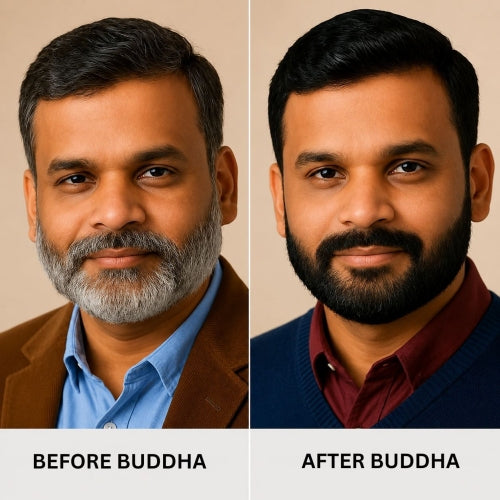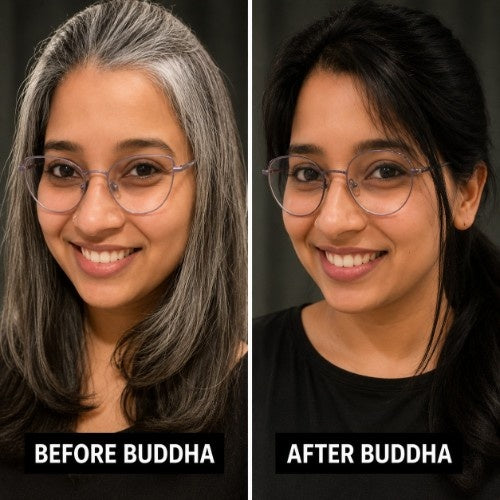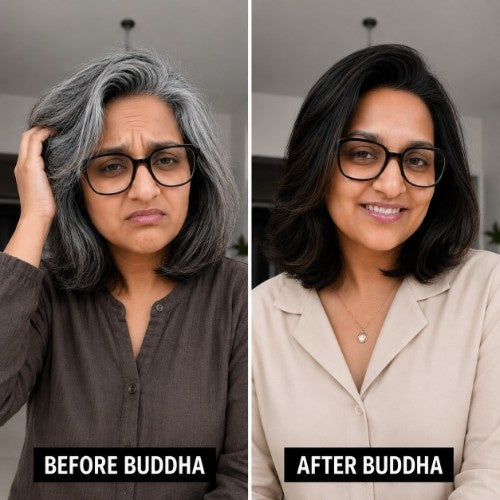

Seeing your beard gradually turn grey can be surprising, especially when it starts earlier than expected. While some greying is a normal part of ageing, premature beard greying may also be associated with genetics, oxidative stress, lifestyle factors, nutritional deficiencies and certain health conditions.

Buddha Natural - Anti Grey Beard Serum Licensed under CC BY 2.0
The good news is that you can take practical steps to support healthier-looking beard hair naturally. A consistent diet, good grooming routine, adequate sleep, stress management and a suitable beard-care product can all play a role. For men looking for a botanical-based grooming option, Buddha Natural Anti-Grey Beard Hair Serum can be incorporated into a regular beard-care routine. You can learn more about the product here: Buddha Natural Anti-Grey Beard Hair Serum.
What Causes Beard Hair to Turn Grey?
Hair gets its natural colour from melanin, produced by pigment-producing cells called melanocytes inside the hair follicle. As melanocyte activity declines, new hairs may contain less pigment and appear grey or white. The American Academy of Dermatology notes that hair commonly begins greying during the 30s and 40s, although genetics can cause it to happen much earlier.
Research suggests that premature greying is multifactorial. Important associations include:
- Genetics and family history
- Age-related changes in melanocytes
- Oxidative stress
- Smoking
- Vitamin B12 deficiency
- Low ferritin/iron status
- Certain mineral deficiencies
- Thyroid disorders
- Lifestyle and dietary factors
A systematic review published in Dermatologic Therapy found associations between premature greying and factors including smoking, vitamin deficiencies, low calcium/ferritin, thyroid disorders and family history. Importantly, not every grey beard is caused by a nutritional deficiency. Genetics and normal biological ageing remain major factors.
5 Natural Ways to Support Healthy Beard Colour
1. Eat a Nutrient-Rich Diet - A balanced diet provides nutrients needed for normal hair-follicle function. Include foods containing:

Odenson - 5 Natural Ways to Reverse Premature Greying Licensed under CC BY 2.0
- Vitamin B12 — dairy, eggs and fortified foods
- Iron — legumes, leafy vegetables and appropriate animal foods
- Zinc — seeds, legumes and nuts
- Copper — nuts, seeds and whole grains
- Protein — eggs, dairy, legumes and other protein-rich foods
- Folate — leafy greens, beans and vegetables
- Vitamin D — fortified foods and appropriate sunlight exposure
An Indian case-control study found associations between premature hair greying and lower serum ferritin and vitamin B12 levels in young patients. The researchers also emphasized that larger studies are needed to establish definitive causation. Do not take high-dose supplements simply because you have grey hair. If premature greying is extensive or occurs unusually early, a doctor can determine whether blood tests are appropriate.
2. Avoid Smoking - Smoking is one lifestyle factor repeatedly associated with premature hair greying. A recent review in the International Journal of Dermatology explains that smoking generates reactive oxygen species and may contribute to melanocyte damage.
If you smoke, quitting is beneficial for your overall health as well as potentially reducing one avoidable contributor to premature greying.
3. Manage Chronic Stress - Stress does not necessarily mean that every grey hair is caused by anxiety. However, research has identified biological pathways through which stress may influence hair pigmentation. The American Academy of Dermatology notes research linking the body's stress response with melanocyte changes that can contribute to greying. Try practical stress-management habits such as:
- Regular exercise
- Consistent sleep
- Meditation
- Breathing exercises
- Outdoor activity
- Limiting excessive screen time before bed
4. Protect Your Beard From Environmental Damage - UV exposure and oxidative stress can contribute to hair-fibre damage. Grey and white hair can also be more susceptible to weathering because of changes associated with loss of pigment. A dermatology review notes that grey hair can be coarser and more vulnerable to environmental damage. Keep your beard conditioned and avoid excessive heat or harsh grooming practices.
5. Keep Your Beard Properly Conditioned - Dry, rough beard hair can make grey strands appear more noticeable. Regular conditioning can:
- Reduce dryness
- Improve softness
- Reduce frizz
- Improve shine
- Make the beard look more groomed
A beard serum can be useful as part of this cosmetic-care approach.
Buddha Natural Anti-Grey Beard Hair Serum - For men who want to add a dedicated beard serum to their routine, Buddha Natural Anti-Grey Beard Hair Serum can be considered as a grooming product designed specifically for beard care and removing greys. You can explore the product here: Shop Buddha Natural Anti-Grey Beard Hair Serum
Beard Greying: What Can You Realistically Expect?
One of the biggest mistakes in beard-care marketing is promising that grey hairs will disappear within a few days. Hair grows slowly, and a topical cosmetic product cannot instantly change the pigment already present in an existing hair shaft. A more realistic approach is to monitor appearance and beard condition over several weeks.
Example Monitoring Timeline
- Week 1–2: Monitor beard softness, dryness, texture, and grooming comfort.
- Week 3–4: Monitor overall beard appearance, shine, and manageability.
- Week 5–7: Monitor changes in the appearance of grey strands and overall beard uniformity.
- Week 8–12: Compare photographs taken under similar lighting conditions.
- 3+ Months: Decide whether the routine is providing a worthwhile cosmetic benefit.
Before & After: How to Track Beard-Greying Changes
If you are using a beard-care routine, take photographs before starting. For a meaningful comparison: 
Buddha Natural - Anti Grey Beard Serum & Beard Wash Combo Licensed under CC BY 2.0
- Take a clear front-facing photograph.
- Photograph both sides of the beard.
- Use the same room and lighting.
- Keep the camera at approximately the same distance.
- Avoid filters.
- Take photographs every 4 weeks.
- Compare photographs after at least 8–12 weeks.
Why is this important? - Human perception is poor at remembering gradual changes. Consistent photographs provide a much more useful visual record. Do not edit or digitally darken before-and-after photographs.
Age Distribution: When Does Beard Greying Usually Begin?
There is considerable individual variation. Hair commonly begins greying during the 30s and 40s, according to the American Academy of Dermatology. However, premature greying can occur much earlier. A review of premature hair greying notes that definitions vary by ethnicity; one commonly cited benchmark considers greying before 25 years in Asian populations to be premature. A retrospective Indian study of premature greying found a very strong family-history association: 90.1% of its cases reported premature greying in at least one biological parent or sibling. The study also documented beard involvement in a small number of male patients.

Mobros - Mo Bros Guide To Grey Beards Licensed under CC BY 2.0
Simplified age pattern
- Teens–20s: - Early or premature greying deserves attention to family history, lifestyle and possible nutritional/medical contributors.
-
30s: - Some men begin noticing scattered grey beard hairs.
-
40s: - Progressive salt-and-pepper beards become increasingly common.
- 50s and beyond: - Increasing grey or white beard hair is generally part of normal ageing, although the rate varies widely.
These age ranges are descriptive rather than a prediction for any individual.
What Percentage of Users Notice Reduced Grey Appearance?
This is an area where responsible reporting matters. Unless a brand has conducted and documented a properly designed consumer study, there is no scientifically valid percentage that can be claimed for “users noticing reduced grey appearance.” For example, it would be inappropriate to publish claims such as: “87% of men saw less grey hair after 30 days”
unless the brand can provide the underlying study, participant number, methodology, duration, product-use instructions and statistical analysis. Buddha Natural clearly states this in its studies and gives such percentages on its product page. Please refer to Buddha Natural Anti-Grey Beard Hair Serum
What Dermatologists Say About Grey Hair
The dermatology literature consistently emphasizes that premature greying is multifactorial. The International Journal of Dermatology review “Premature hair graying: a multifaceted phenomenon” discusses genetics, oxidative stress, smoking, nutrition and associated medical conditions.
The American Academy of Dermatology similarly explains that genetics, ageing, stress and underlying health conditions can influence when hair turns grey. For readers experiencing unusually early or rapidly progressing greying, consultation with a dermatologist can help determine whether further evaluation is appropriate. A real-world example is Dr. Shrayan Pal, a consultant dermatologist whose 2026 IADVL West Bengal State Branch newsletter article discusses premature greying from clinical and psychosocial perspectives.
What Ayurvedic Doctors Say About Premature Greying
In Ayurveda, premature greying is traditionally discussed under Palitya/Palithya. Ayurvedic literature approaches hair health through factors such as diet, lifestyle, constitution and traditional concepts of dosha balance. A recent article in the International Journal of Ayurveda and Pharma Research discusses Ayurvedic approaches to graying hair and identifies Palithya as the Ayurvedic context for the condition.
American Academy of Dermatology - What Causes Gray Hair Licensed under CC BY 2.0
Dr. Surya Bhagwati, BAMS, is another identifiable Ayurvedic practitioner whose published material discusses Ayurvedic approaches to premature greying and hair care. Ayurvedic approaches should not, however, be presented as scientifically proven to reverse all genetically determined grey beard hair.
Hair Specialists and Trichologists
Hair specialists can be particularly useful when premature greying occurs alongside hair loss, scalp problems, inflammation or other changes.
Dr. Akshay Batra, BHMS, FTTS, is listed by The Trichological Society as its Honorary Adviser in India and as a trichologist with a special interest in hair and scalp problems. A consultation with a dermatologist or qualified hair specialist is particularly appropriate when:
- Greying begins unusually early
- Greying develops suddenly
- You also have significant hair loss
- There are scalp changes
- You have other unexplained symptoms
- You suspect a nutritional deficiency
- You have a known thyroid or autoimmune condition
A Simple Natural Beard-Care Routine
1. Morning
- Wash your face and beard gently.
- Pat the beard dry rather than aggressively rubbing it.
- Apply a small amount of suitable beard serum.
- Comb the beard gently.
2. During the Day
- Maintain good hydration.
- Eat a balanced diet.
- Avoid smoking.
- Protect your skin and beard from excessive environmental exposure.
3. Evening
- Clean the beard if necessary.
- Keep the skin beneath the beard clean.
- Apply your chosen beard-care product according to its instructions.
- Maintain a consistent sleep schedule.
Consistency is more useful than constantly switching between products.
When Should You See a Doctor?
Do not assume that premature greying is purely cosmetic. Consider speaking with a dermatologist or physician if you notice:
- Very rapid onset of greying
- Extensive greying at a young age
- Significant hair loss
- Scalp itching, scaling or inflammation
- Fatigue or other unexplained symptoms
- A strong suspicion of nutritional deficiency
- A personal or family history of thyroid or autoimmune disease
A medical professional can decide whether investigations such as vitamin B12, ferritin/iron studies or thyroid testing are appropriate.
The Bottom Line: How to Stop Beard Greying Naturally
You cannot completely control the genetic and ageing processes responsible for beard greying. However, you can support healthier beard growth and appearance by focusing on the factors you can control. The most practical strategy is: Eat well + correct genuine deficiencies + avoid smoking + manage stress + protect the beard + maintain consistent grooming.

Kingsmenpremium - How to reduce grey hair in beard Licensed under CC BY 2.0
A beard serum can complement this routine by helping condition and improve the cosmetic appearance of beard hair. For men interested in a dedicated botanical beard-care product, Buddha Natural Anti-Grey Beard Hair Serum can be added to a regular grooming routine. Explore Buddha Natural Anti-Grey Beard Hair Serum
Frequently Asked Questions
1. Can grey beard hair naturally become black again? - Occasionally, pigment changes may be reversible when an underlying contributing factor is addressed. Use Buddha Natural Grey Beard Serum regulary.
2. What is the best natural remedy for grey beard hair? - There is no single proven natural remedy. A balanced diet, avoiding smoking, managing stress and maintaining good beard care are more evidence-informed approaches. Use Buddha Natural Grey Beard Serum regulary.
3. Does stress cause a grey beard? - Stress may contribute to biological processes involved in hair pigmentation, but genetics and ageing remain major determinants.
4. How long should I use a beard serum? - Follow the specific product's directions. For cosmetic evaluation, taking standardized photographs over approximately 8–12 weeks can provide a more useful comparison than judging changes after only a few days.
5. Is premature beard greying a medical problem? - Not necessarily. However, unusually early or rapidly progressing greying may justify medical evaluation, particularly when accompanied by other symptoms.
More about the Author : Dr. Kusum Singh, MD Dermatology, BAMS, PhD, Experience of 7 years.
Medical Review by: Dr. Nehal Gajera, Doctor, Clinical Researcher, BHMS, 17 Yrs
Scientific References
-
Mahendiratta S, Sarma P, Kaur H, et al.- Premature graying of hair: Risk factors, co-morbid conditions, pharmacotherapy and reversal—A systematic review and meta-analysis. Dermatologic Therapy. 2020;33(6):e13990. Available at: Mahendiratta S - Premature graying of hair
-
Desai DD, Karim M, Nohria A, et al.- Premature hair graying: a multifaceted phenomenon. International Journal of Dermatology. 2024. Available at: Desai DD - Premature hair graying
-
Bangalore Kumar A, Shamim H, Nagaraju U. Premature Graying of Hair: Review with Updates. International Journal of Trichology. Available at: Bangalore Kumar A - Premature Graying of Hair
-
Chakrabarty S, Krishnappa PG, Gowda DG, Hiremath J.- Factors Associated with Premature Hair Graying in a Young Indian Population. International Journal of Trichology. Available at: Chakrabarty S - Factors Associated with Premature Hair Graying in a Young Indian Population
-
Sharma N, Dogra D.- Association of Epidemiological and Biochemical Factors with Premature Graying of Hair: A Case–Control Study. Available at: Sharma N
-
Sonthalia S, Priya A, Tobin DJ.- Demographic Characteristics and Association of Serum Vitamin B12, Ferritin and Thyroid Function with Premature Canities in Indian Patients from an Urban Skin Clinic of North India. Available at: Sonthalia S
-
Chavan D.- Reversal of Premature Hair Graying Treated with a Topical Formulation Containing α-Melanocyte-Stimulating Hormone Agonist (Greyverse Solution 2%). International Journal of Trichology. 2022/2023. Available at: Chavan D
-
Krishnan K, Seemaja G.- The Ayurvedic Management in Graying of Hair. International Journal of Ayurveda and Pharma Research. Available at: Krishnan K -The Ayurvedic Management in Graying of Hair
- American Academy of Dermatology.- What causes gray hair, and can I stop it? Available at: American Academy of Dermatology