
Walk into any men's grooming store today and you'll likely find shelves filled with beard oils, beard balms, beard waxes, and increasingly, beard serums. While both beard oil and beard serum promise healthier-looking facial hair, they are not the same product and they serve different purposes.
If you've ever wondered:
- Should I use beard serum or beard oil?
- Which is better for grey beard hair?
- Can a beard serum improve beard health?
- Does beard oil help with premature greying?
- Which product is less greasy?
you're not alone.
The answer depends on your beard goals. Someone with a dry, itchy beard has different needs than someone concerned about premature grey beard hair or someone looking for lightweight daily care. In this comprehensive guide, we'll compare beard serum and beard oil using current dermatology research, trichology (hair science), and Ayurvedic principles. You'll learn what each product does, who should use it, and how to choose the right option for your grooming routine.
Quick Answer (TL;DR)
Beard Serum vs. Beard Oil: Quick Comparison
If you're short on time, here's a simple comparison between beard serum and beard oil:
-
Texture: Beard serum has a lightweight texture, while beard oil is richer and oilier.
-
Absorption: Serum absorbs quickly into the skin and beard, whereas beard oil takes longer to absorb.
-
Skin Penetration: Beard serum penetrates deeper into the skin, while beard oil mainly provides surface conditioning.
-
Beard Softening: Both beard serum and beard oil are excellent for softening beard hair.
-
Greasy Feel: Beard serum leaves little to no greasy residue, while beard oil may feel moderately greasy.
-
Best For: Beard serum is ideal for daily grooming, lightweight care, and formulas with targeted active ingredients. Beard oil is better suited for dry, coarse, or curly beards that need extra conditioning.
-
Humid Weather: Beard serum is generally more comfortable in humid weather because of its lightweight feel. Beard oil may feel heavier in warm or humid conditions.
- Grey Beard Care: The effectiveness of a beard serum for grey beard care depends on its active ingredients. Beard oil primarily conditions grey beard hair, improves softness and appearance, but does not naturally restore pigment.
Understanding Beard Care Beyond Appearance
Many men assume facial hair is simply "hair growing on the face." In reality, every beard hair is supported by a living hair follicle beneath the skin.
Healthy beard appearance depends on several biological factors:
- Hair shaft integrity
- Healthy skin barrier
- Sebum balance
- Oxidative stress
- Nutrition
- Genetics
- Hormonal influences
- Melanocyte (pigment cell) function
A grooming product cannot change your genetics, but it can help improve beard softness, manageability, hydration, and overall appearance. Products containing antioxidant or botanical ingredients are also being studied for their potential role in supporting hair follicle health.
What Is Beard Oil?
Beard oil is one of the oldest and most widely used beard grooming products. It is primarily designed to moisturize both the beard and the skin underneath.
Most beard oils consist of carrier oils such as:
- Jojoba oil
- Argan oil
- Sweet almond oil
- Coconut oil
- Grapeseed oil
- Castor oil
Some formulations also include essential oils for fragrance or additional botanical benefits.
How Beard Oil Works - Rather than penetrating deeply into the follicle, beard oil mainly coats the hair shaft and reduces moisture loss. This makes beard hairs:
- Softer
- Shinier
- Easier to comb
- Less prone to breakage from dryness
Beard oil also helps relieve:
- Itchy beard
- Beard dandruff (beardruff)
- Dry skin beneath the beard
This conditioning effect is particularly valuable for men with long, coarse, or curly beards.
Benefits of Beard Oil
Regular use of beard oils help:
- Improve beard softness
- Reduce friction between hairs
- Minimize tangling
- Improve shine
- Support skin hydration
- Reduce flaking caused by dryness
What Is Beard Serum?
A beard serum is generally a lighter, fast-absorbing formulation designed to deliver conditioning agents and, in some products, additional active ingredients directly to the beard and the skin beneath it.
Unlike traditional oils, beard serums contain a combination of:
- Botanical extracts
- Humectants
- Lightweight emollients
- Antioxidants
- Vitamins
- Herbal ingredients
- Plant-derived actives
Because serums are usually less greasy, they are popular among men who prefer a non-sticky finish for everyday use.
How Beard Serum Works
A beard serum is intended to spread easily across the beard and reach the skin beneath the facial hair more effectively than heavier oil blends. Depending on its formulation, a serum helps:
- Hydrate beard hair
- Reduce rough texture
- Improve manageability
- Support the skin barrier
- Protect against environmental dryness
- Deliver botanical ingredients without leaving a heavy residue
- Reduce whites
It's important to note that the effectiveness of a beard serum depends entirely on its ingredients.
Beard Serum vs Beard Oil: The Science Behind the Difference
Although both products improve beard appearance, they function differently.
Beard Oil
- Primarily conditions the hair shaft
- Creates an occlusive layer that helps retain moisture
- Best suited for dry or coarse facial hair
- Often feels richer on the skin
Beard Serum
- Typically uses a lighter vehicle
- Spreads quickly across the beard
- Often formulated with additional botanical or antioxidant ingredients
- Leaves minimal oily residue
Neither format is universally "better." The right choice depends on your beard type, skin type, and grooming goals.
Dermatologist Perspective
Dermatologists emphasize that beard health starts with healthy skin and hair follicles rather than cosmetic products alone. According to experts including dermatologist Antonella Tosti, hair ageing and greying involve complex biological processes such as oxidative stress, melanocyte depletion, genetic influences, and changes within the hair follicle. From a dermatology standpoint:
- Beard oil is useful for conditioning.
- Beard serum may be preferable when lightweight application and active cosmetic ingredients are desired.
- Persistent or sudden premature greying should be assessed medically, especially if accompanied by other symptoms.
Ayurvedic Perspective
Ayurveda views healthy hair and beard growth as being influenced by overall balance in the body, nutrition, digestion (Agni), and tissue nourishment (Dhatus). Classical Ayurvedic texts describe herbs traditionally used to support hair health, including:
- Bhringraj (Eclipta alba)
- Amla (Emblica officinalis)
- Brahmi (Bacopa monnieri)
- Neem
- Sesame oil
According to renowned Ayurvedic physician Vasant Lad, healthy hair reflects broader systemic well-being, emphasizing diet, stress management, sleep, and appropriate herbal care rather than relying on topical products alone. Modern scientific research continues to investigate many traditional herbs, but evidence for reversing grey beard hair varies by ingredient.
Where Does Buddha Natural Anti Grey Beard Hair Serum Fit In?
If your primary concern is conditioning a dry beard, a quality beard oil can be an excellent daily moisturizer. However, if your goal is a lightweight, non-greasy grooming routine with an Ayurvedic-inspired formulation designed for beard care, a beard serum may be a more suitable option.
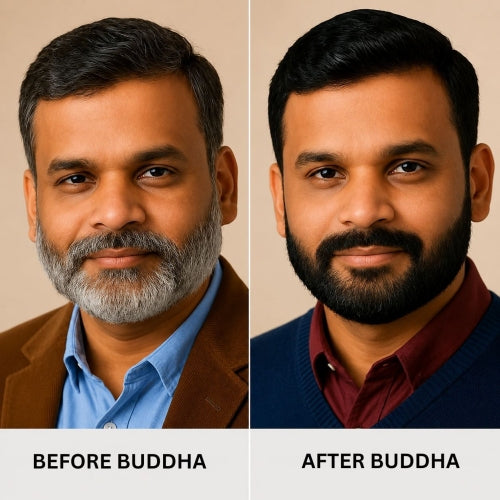
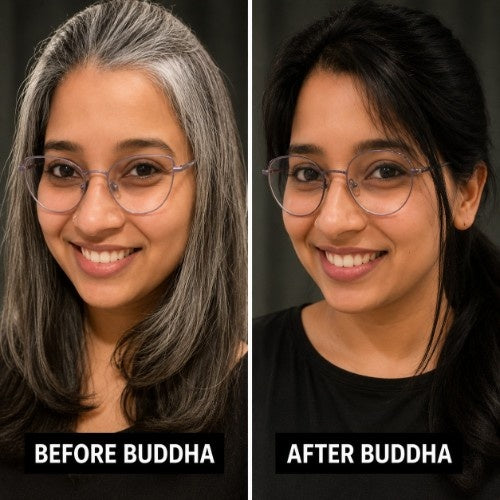
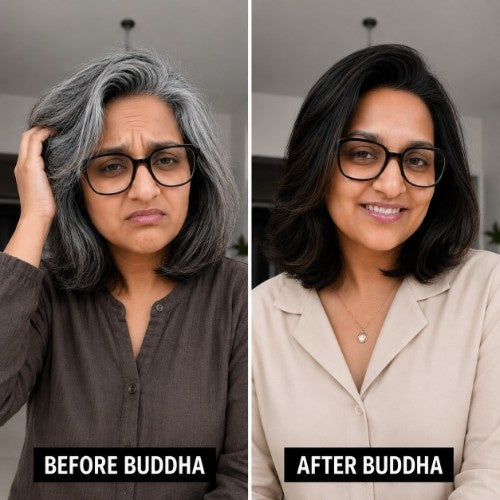
The Buddha Natural Anti Grey Beard Hair Serum is formulated with herbal ingredients traditionally associated with beard and hair care. Buddha Natural Anti Grey Beard Hair Serum will help to reduce premature greying and reverse all white hair to black hair.
Beard Serum vs Beard Oil for Grey Beard
One of the most common questions among men in their late 20s and beyond is: "Will beard serum or beard oil help with grey beard hair?"
The answer requires understanding why beard hair turns grey in the first place.
Greying is primarily a biological process driven by a decline in melanin production inside the hair follicle. Melanin is the pigment that gives beard hair its natural black, brown, blonde, or red color. Specialized cells called melanocytes produce this pigment during the active growth (anagen) phase of each hair cycle. As we age, melanocyte stem cells gradually decline, oxidative stress accumulates, and pigment production slows or stops. Genetics also play a major role in determining when greying begins. Peer-reviewed research indicates that these biological changes—not surface dryness—are the main drivers of hair greying.
So, if you are using a proper grey hair serum then it is bound to help you reverse the greys to black. Buddha Natural Anti Grey Beard Hair Serum will help to reduce premature greying and reverse all grey and white beard hair to black hair.
What Beard Oil Can Do for Grey Beard
Grey hairs are often:
- Coarser
- Drier
- Less reflective
- More difficult to manage
A beard oil helps by:
- Softening coarse grey hairs
- Reducing frizz
- Adding shine
- Improving texture
- Making the beard appear healthier
However, beard oil does not restore lost melanin.
What Beard Serum Can Do for Grey Beard
A beard serum may offer different advantages depending on its formulation. A lightweight serum containing botanical extracts and antioxidants may:
- Hydrate beard hair
- Improve softness
- Support the skin beneath the beard
- Reduce the appearance of rough, dull facial hair
- Deliver active ingredients more evenly than heavier oils
Why Does Beard Hair Turn Grey?
Understanding the biology helps set realistic expectations. Researchers have identified several major contributors:
1. Genetics - Genetics is the strongest predictor of when beard hair begins to grey.
If your father or grandfather experienced early beard greying, your likelihood is generally higher.
2. Reduced Melanin Production - Melanocytes gradually become less active with age.
As melanin production decreases:
- New beard hairs emerge lighter.
- Individual hairs may become partially grey.
- Eventually, hairs may grow completely white.
This is a normal part of hair ageing.
3. Oxidative Stress - Hair follicles naturally produce reactive oxygen species during metabolism. Normally, antioxidant enzymes such as:
- Catalase
- Superoxide dismutase
- Glutathione peroxidase
help neutralize these molecules. With age, antioxidant defenses may decline, allowing oxidative stress to damage melanocytes and contribute to pigment loss. This mechanism has been described in multiple dermatology studies, although it is only one part of the greying process.
4. Nutritional Deficiencies - Certain deficiencies have been associated with premature hair greying in some individuals, including:
- Vitamin B12
- Iron
- Copper
- Folate
- Vitamin D (in selected populations)
Not everyone with grey beard hair has a deficiency, but if greying occurs unusually early or is accompanied by other symptoms, medical evaluation may be appropriate.
5. Ageing - As we grow older:
- Melanocyte stem cells decline.
- Hair follicles regenerate less efficiently.
- Pigment production becomes inconsistent.
This gradual process affects both scalp hair and facial hair.
Beard Serum vs Beard Oil for Beard Growth
Many products are marketed as "beard growth boosters," but it's important to separate cosmetic claims from scientific evidence. Beard growth depends primarily on:
- Genetics
- Testosterone
- Dihydrotestosterone (DHT)
- Hair follicle sensitivity to hormones
- Overall health
Beard Oil and Growth
Its benefits include:
- Reducing hair breakage
- Improving flexibility
- Conditioning existing hairs
- Making the beard appear fuller by reducing frizz
Beard Serum and Growth
Some beard serums contain botanical ingredients intended to support scalp or beard care. While these ingredients may improve the condition of the skin and hair, evidence that cosmetic serums alone stimulate significant new beard growth is limited. A healthier beard can appear denser simply because:
- Hair breakage is reduced.
- Dry hairs lie flatter.
- Individual hairs look smoother and shinier.
Beard Serum vs Beard Oil for Dry Beard
Dryness is one area where both products can provide meaningful cosmetic benefits.
1. Beard Oil
Excellent for:
- Very coarse beards
- Thick facial hair
- Cold climates
- Low humidity
Advantages:
- Long-lasting conditioning
- Excellent softness
- Reduced tangling
- Improved shine
Possible downside: Some users find oils:
- Heavy
- Sticky
- Slow to absorb
2. Beard Serum
Excellent for:
- Office workers
- Daily commuters
- Hot climates
- Oily skin
- Short to medium beards
Advantages:
- Lightweight
- Fast absorption
- Minimal greasy residue
- Easy daytime application
Beard Serum vs Beard Oil for Patchy Beard
Patchy beard growth usually results from:
- Genetics
- Hormonal factors
- Natural variation in follicle density
- Scarring (in some cases)
Products can improve the appearance of a patchy beard by:
- Reducing frizz
- Helping hairs lie flatter
- Increasing softness
- Making existing hair appear healthier
Ingredient Comparison
Beard Serum vs Beard Oil – Key Differences
-
Botanical Extracts - Beard Serum: Often included. Beard Oil: Sometimes included.
-
Carrier Oils - Beard Serum: Usually contains lower amounts of carrier oils. Beard Oil: Carrier oils are the primary ingredient.
-
Texture - Beard Serum: Lightweight texture. Beard Oil: Heavier texture.
-
Deep Conditioning - Beard Serum: Provides moderate conditioning. Beard Oil: Offers excellent deep conditioning.
-
Shine - Beard Serum: Gives a moderate shine. Beard Oil: Provides a high shine.
-
Finish - Beard Serum: Leaves a non-greasy finish. Beard Oil: May feel greasier or less non-greasy.
-
Suitable for Humid Weather - Beard Serum: Excellent choice for humid climates. Beard Oil: May feel heavy in humid weather.
- Skin Feel - Beard Serum: Fast-absorbing and lightweight on the skin. Beard Oil: Rich, nourishing, and more occlusive.
Beard Serum vs Beard Oil for Different Beard Types
1. Short Beard - A lightweight serum is often more comfortable because it absorbs quickly and leaves little residue.
2. Medium Beard - Either product can work well. The choice depends on whether you prefer:
- Rich conditioning (oil)
- Lightweight daily care (serum)
3. Long Beard - Long beards often benefit from the intensive conditioning that beard oils provide, especially if the hair is coarse or prone to tangling. Some men also combine a lightweight serum for the skin with an oil applied mainly to the beard length.
4. Curly Beard - Curly beards lose moisture more easily. A nourishing beard oil may provide longer-lasting conditioning, while a serum can complement it if a lighter daytime product is preferred.
5. Sensitive Skin - People with sensitive skin should look for products that:
- Avoid unnecessary fragrances
- Use skin-friendly ingredients
- Are appropriate for their skin type
Patch testing any new cosmetic product is recommended before regular use.
When a Beard Serum May Be the Better Choice
A beard serum may suit you if you:
- Prefer a lightweight finish
- Want quick absorption
- Dislike greasy products
- Have oily facial skin
- Live in a warm or humid climate
- Are looking for an Ayurvedic-inspired daily grooming product
For example, a formulation like Buddha Natural Anti Grey Beard Hair Serum combines botanical ingredients traditionally used in hair care with a lightweight application experience.
When a Beard Oil May Be the Better Choice
A beard oil is often preferable if you:
- Have a very long beard
- Experience significant dryness
- Want maximum softness
- Live in a cold or dry climate
- Enjoy a richer conditioning routine
Why Choose a Beard Serum Instead of a Beard Oil?
By now, you've seen that beard serums and beard oils each have their own strengths. The best choice depends on your beard type, grooming routine, and personal preferences rather than a single "best" product. A beard serum is often the preferred option if you want:
- A lightweight, non-greasy finish
- Fast absorption before work or social events
- Easy daily application
- Beard conditioning without an oily residue
- A formulation that combines botanical ingredients with modern cosmetic technology
For many men, especially those with short to medium-length beards or oily skin, a serum can provide comfortable everyday beard care.
Where Does Buddha Natural Anti Grey Beard Hair Serum Fit?
If your goal is to maintain a healthy-looking beard, improve softness, remove greys, turn white to black beard hair and support your daily grooming routine with an Ayurvedic-inspired formulation, Buddha Natural Anti Grey Beard Hair Serum is designed for that purpose.
Its formulation includes traditionally used botanical ingredients selected for beard and hair care. As with any cosmetic product, results depend on factors such as your beard type, consistency of use, age, genetics, and overall health.
What You Can Realistically Expect
With consistent use as part of a beard care routine, users may notice cosmetic improvements such as:
- Softer beard texture
- Better manageability
- Reduced dryness
- Less frizz
- Improved overall beard appearance
- A healthier-looking beard with regular grooming
These are cosmetic conditioning benefits.
Suggested Daily Beard Care Routine
Consistency matters more than using multiple products.
- Morning
- Wash your face with a gentle cleanser.
- Pat the beard dry—avoid rubbing vigorously.
- Apply a small amount of beard serum evenly.
- Massage gently into both the beard and the skin underneath.
- Comb or brush to distribute the product.
- Evening
- Cleanse away sweat, pollution, and styling residue.
- Reapply serum if desired, following the product directions.
- Gently comb to reduce tangles.
- Weekly
- Trim split ends if needed.
- Clean your beard comb or brush.
- Exfoliate the skin beneath the beard gently (1–2 times per week) if appropriate for your skin.
Lifestyle Habits That Support Healthy Beard Appearance
No topical product can replace healthy daily habits. Dermatologists and nutrition experts commonly recommend:
1. Eat a Balanced Diet - Include foods rich in:
- Protein
- Iron
- Zinc
- Vitamin B12
- Folate
- Vitamin D
- Copper
- Omega-3 fatty acids
These nutrients support normal hair health, although supplementation should only be considered when deficiencies are confirmed.
2. Sleep Well - Hair follicles undergo important repair processes during rest. Aim for 7–9 hours of quality sleep most nights.
3. Manage Stress - Long-term stress has been linked to changes in hair biology and may contribute to increased hair shedding. Stress management supports overall well-being and may indirectly benefit hair health.
4. Avoid Smoking - Research suggests smoking is associated with increased oxidative stress and may contribute to premature hair ageing.
5. Protect Your Beard - Environmental factors such as:
- UV exposure
- Pollution
- Chlorinated water
- Excessive heat styling
can contribute to dryness and damage. Wearing a hat in intense sunlight and rinsing the beard after swimming can help reduce these effects.
Understanding Realistic Timelines
One of the biggest misconceptions in beard care is expecting overnight changes. Hair grows gradually, and cosmetic improvements typically become noticeable only with consistent care.
1. First Few Applications - You may notice:
- Softer texture
- Easier combing
- Less roughness
- Reduced dryness
These are conditioning effects.
2. After Several Weeks of Consistent Grooming - Depending on your beard type and routine, you may observe:
- Better manageability
- Reduced frizz
- Improved appearance
- Healthier-looking facial hair
These observations vary between individuals and should not be interpreted as evidence of changes in beard pigmentation.
3. Long-Term - Healthy grooming habits, combined with a balanced lifestyle, help maintain the appearance of your beard over time. However, age-related greying remains a natural biological process for most men.
Beard Serum vs Beard Oil: Final Comparison
1. Beard Serum
- Lightweight formula that feels comfortable on the beard.
- Absorbs quickly without leaving a greasy feel.
- Provides moderate deep conditioning.
- Suitable for medium to long beards.
- Excellent choice for humid climates.
- Leaves minimal oily residue.
- Ideal for daily office or professional use.
- Helps soften and smooth the beard.
2. Beard Oil
- Richer and heavier formula than beard serum.
- Absorbs at a moderate rate.
- Provides excellent deep conditioning.
- Ideal for long, thick, or coarse beards.
- May feel heavier in humid climates.
- More likely to leave an oily residue.
- Can also be used daily, depending on preference.
- Effectively softens and nourishes the beard.
Frequently Asked Questions (FAQs)
- Is beard serum better than beard oil? - Neither is universally better. Beard serum is generally lighter and absorbs faster, while beard oil offers richer conditioning.
-
Which is better for dry beard? - For very dry or coarse beards, beard oil often provides longer-lasting conditioning. For lighter daily hydration, a beard serum may be more comfortable.
-
Can I use beard serum every day? - Yes. Follow the manufacturer's instructions. Daily use is common for cosmetic beard serums.
-
Can I use beard oil and beard serum together? - Yes. Some people apply a lightweight serum first and use beard oil on longer beard lengths if additional conditioning is needed.
-
Does beard serum increase beard growth? - There are some scientific evidences showing that cosmetic beard serums significantly increase beard growth in healthy men.
-
Which product is better for oily skin? - A lightweight beard serum is often preferred because it absorbs quickly and leaves less residue.
-
Which product is better for long beards? - Long, coarse beards often benefit from the richer conditioning of beard oil.
Key Takeaways
- Beard oil and beard serum are both valuable grooming products, but they serve slightly different purposes.
- Beard oil excels at deep conditioning and moisture retention.
- Beard serum provides lightweight hydration and may be better suited for daily use and delivering botanical ingredients.
- Choosing the right product depends on your beard type, skin type, climate, and grooming preferences.
Conclusion
The comparison between beard serum and beard oil isn't about choosing a winner—it’s about selecting the product that aligns with your grooming needs. If your beard is long, coarse, or very dry, a quality beard oil can provide excellent conditioning and moisture retention.
If you prefer a lightweight, non-greasy product for everyday use, a beard serum may be the better choice. Products like Buddha Natural Anti Grey Beard Hair Serum are formulated to support white to black beard hair and very effective to stop pre mature greying. Whichever option you choose, remember that healthy beard care extends beyond topical products. Consistent grooming, a balanced diet, good sleep, stress management, and realistic expectations are all part of maintaining a beard that looks and feels its best.
More about the Author : Dr. Kusum Singh, MD Dermatology, BAMS, PhD, Experience of 7 years.
Medical Review by: Dr. Nehal Gajera, Doctor, Clinical Researcher, BHMS, 17 Yrs
References
-
Tobin DJ. Hair pigmentation: biology and pathobiology. Journal of Investigative Dermatology Symposium Proceedings. Available at: Tobin – Human hair pigmentation, Wiley
-
Tobin DJ. Aging of the hair follicle pigmentation system. International Journal of Trichology. Available at: PubMed – Aging of the hair follicle pigmentation system
-
Trüeb RM. Oxidative stress in ageing of hair. International Journal of Trichology. Available at: International Journal of Trichology
-
Schallreuter KU, et al. Hydrogen peroxide-mediated oxidative stress in greying hair. FASEB Journal. Available at: University of Manchester – Article record
-
Tobin DJ. The ageing hair follicle. Clinical Dermatology. Available at: academic record for Tobin – The ageing hair follicle
-
American Academy of Dermatology (AAD) – Hair care and healthy hair guidance. Available at: AAD – Everyday hair care
-
British Association of Dermatologists (BAD) – Hair and scalp disorders. Available at: British Association of Dermatologists – Patient information leaflets
-
National Center for Complementary and Integrative Health (NCCIH) – Botanical products and evidence. Available at: NCCIH – Herbs and other botanicals: What the science says
-
Lad V. Textbook of Ayurveda (Vol. 1–3). Ayurvedic Press. Available at: The Ayurvedic Press – Vasant Lad books and Textbook of Ayurveda Vol. 1–3
-
Charaka Samhita (classical Ayurvedic text). Available at: PubMed – Charaka Samhita
-
Sushruta Samhita (classical Ayurvedic text). Available at: PubMed – Sushruta Samhita
-
Sinclair R. Hair ageing and disorders of pigmentation. Dermatology literature. Available at: Sinclair hair ageing and pigmentation literature
-
Paus R, Cotsarelis G. The biology of hair follicles. New England Journal of Medicine. Available at: PubMed – The biology of hair follicles