
A thick, healthy beard is often associated with confidence and maturity. One of the most important factors determining your beard's appearance is melanin—the natural pigment responsible for the color of your beard hair. Whether your beard is black, brown, blonde, red, or gradually turning grey, the answer lies in the type and amount of melanin produced inside each beard hair follicle.
As men age, melanin production naturally declines. However, genetics, oxidative stress, nutrition, hormonal influences, and environmental factors will cause some individuals to notice beard greying much earlier than expected. Understanding how beard melanin works can help you make informed decisions about beard care, lifestyle habits, and cosmetic products designed to improve the appearance of grey beard hair.
What Is Melanin?
Melanin is a naturally occurring pigment produced by specialized cells called melanocytes. These cells are located inside hair follicles and continuously transfer pigment to growing hair fibers during the hair growth cycle. Scientists recognize two major forms of melanin in human hair:

Cleveland Clinic - Melanin Licensed under CC BY 2.0
1. Eumelanin - Eumelanin is responsible for darker shades such as:
- Black beard hair
- Dark brown beard hair
- Medium brown beard hair
Higher concentrations of eumelanin produce darker facial hair.
2. Pheomelanin - Pheomelanin produces lighter shades, including:
- Blonde
- Auburn
- Red
- Golden tones
People inherit different combinations of eumelanin and pheomelanin through their genes, resulting in a wide variety of beard colors.
Why Is Beard Hair Sometimes Different From Scalp Hair?
Many men notice that their beard is:
- Darker than their scalp hair.
- Lighter than their scalp hair.
- Contains red patches.
- Develops grey hairs earlier.
This happens because beard follicles and scalp follicles respond differently to hormones—particularly androgens such as testosterone and dihydrotestosterone (DHT). Beard follicles also have distinct genetic regulation, which can influence pigmentation independently of scalp hair.
How Beard Melanin Is Produced
Melanin production begins inside the hair follicle. The process involves:
- Activation of melanocyte stem cells.
- Production of the enzyme tyrosinase, which helps convert the amino acid tyrosine into melanin.
- Formation of pigment granules called melanosomes.
- Transfer of these granules into developing beard hair cells.
As long as melanocytes remain healthy and active, beard hair grows with its natural color.
Why Does Beard Hair Turn Grey?
Grey beard hair develops when melanocytes gradually produce less melanin. Researchers have identified several contributing factors.
1. Natural Aging - The most common cause is aging. Over time:
- Melanocyte stem cells become depleted.
- Pigment-producing cells become less active.
- Oxidative damage accumulates.
- Hair grows with less pigment.
Eventually, hairs appear grey, silver, or white because little or no melanin is incorporated into the hair shaft.
2. Genetics - Genetics plays the largest role in determining:
- When beard greying begins.
- How quickly it progresses.
- Whether grey hairs appear in patches or uniformly.
If close family members experienced early beard greying, there is a greater likelihood of a similar pattern.
3. Oxidative Stress - Hair follicles naturally produce reactive oxygen species (ROS) during metabolism. Normally, antioxidant enzymes such as catalase help neutralize these molecules. However, increased oxidative stress will damage melanocytes and reduce pigment production over time. This mechanism has been discussed extensively in scientific studies investigating hair greying. Sources of oxidative stress will include:
- Smoking.
- Chronic psychological stress.
- Environmental pollution.
- Ultraviolet (UV) exposure.
- Poor dietary habits.
4. Nutritional Factors - Several nutrient deficiencies have been associated with premature hair greying in some individuals, although not every case is caused by nutrition. These will include:
- Vitamin B12 deficiency
- Iron deficiency
- Copper deficiency
- Vitamin D deficiency
- Folate deficiency
5. Medical Conditions - Occasionally, premature greying will occur alongside certain medical conditions, including:
- Autoimmune disorders.
- Thyroid disorders.
- Vitiligo.
- Rare genetic syndromes.
Anyone who experiences sudden or unusually early greying should consider consulting a qualified healthcare professional for evaluation.
Is Premature Beard Greying Common?
Yes. Many men begin noticing isolated grey beard hairs in their late 20s or early 30s, while others retain their natural beard color into their 50s or beyond. The timing varies considerably because genetics remains the strongest determining factor. Premature beard greying does not necessarily indicate poor health.

Pinterest - Grey Beard Before and After Licensed under CC BY 2.0
Does Stress Really Cause Grey Beard Hair?
Stress is frequently blamed for grey hair. Current research suggests the relationship is more complex. Animal studies have demonstrated that intense stress can affect melanocyte stem cells through activation of the sympathetic nervous system. Human studies also indicate that chronic stress will contribute to oxidative damage, although genetics and aging remain the primary drivers of hair greying.
Can Melanin Production Be Increased Naturally?
This is one of the most common questions among men experiencing beard greying. General recommendations include:
- Eating a balanced diet rich in protein, fruits, vegetables, and whole grains.
- Correcting medically confirmed nutrient deficiencies.
- Avoiding smoking.
- Protecting the skin from excessive UV exposure.
- Managing stress.
- Maintaining a healthy sleep schedule.
- Following a consistent beard-care routine.
The Ayurvedic Perspective on Beard Pigmentation
In Ayurveda, premature greying is traditionally associated with an imbalance in Pitta Dosha, along with factors such as poor digestion (Agni), lifestyle habits, and inadequate nourishment of the body's tissues (Dhatus). Classical Ayurvedic texts describe herbs traditionally used to support healthy hair, including:
- Bhringraj (Eclipta alba)
- Amla (Emblica officinalis)
- Brahmi (Bacopa monnieri)
- Neem (Azadirachta indica)
Supporting the Appearance of a Healthy Beard
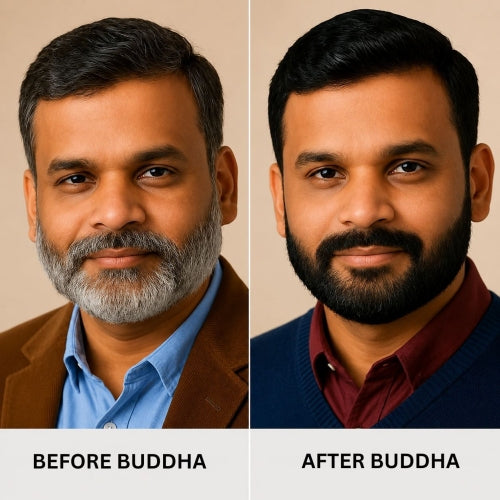
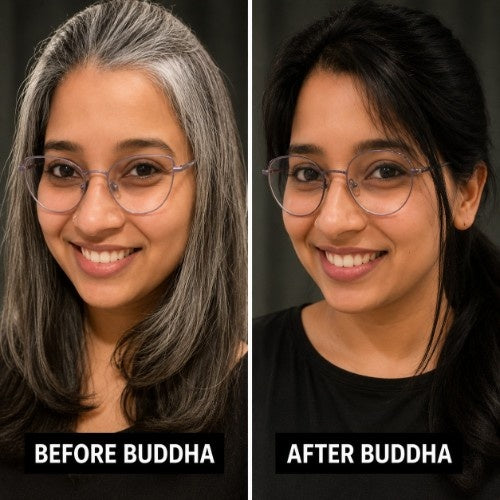
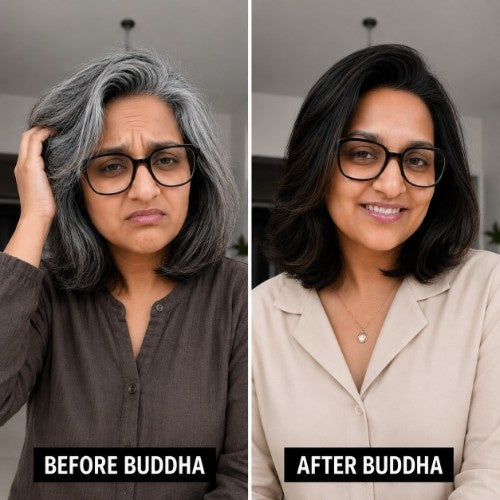
Maintaining a consistent grooming routine will improve the overall appearance, reduce grey beard, texture, and condition of the beard. Products such as Buddha Natural Anti Grey Beard Hair Serum are formulated with natural oils and herbal extracts traditionally used to support beard health and natural pigmentation. With regular use, It will help reduce the appearance of premature grey beard hair, gradually restore grey or white beard hair to a natural black appearance, and support a healthier, fuller-looking beard.
The Biology of Beard Pigmentation
Every beard hair begins its journey inside a tiny structure beneath the skin called the hair follicle. This follicle is much more than a simple anchor for hair—it is a dynamic biological unit where hair growth, pigmentation, and regeneration occur. Within each follicle are specialized pigment-producing cells known as melanocytes. During the active growth phase of the hair cycle (anagen), melanocytes synthesize melanin and transfer pigment-containing structures called melanosomes to keratin-producing cells. As these keratinocytes harden to form the hair shaft, the melanin becomes embedded within the hair, giving it its characteristic color.
Scientists have shown that melanocyte activity is closely synchronized with the hair growth cycle. When melanocytes become less active or their stem cell population declines, newly produced beard hairs contain less pigment and gradually appear grey or white.
The Hair Growth Cycle and Beard Color

Practo - Premature Beard Greying Licensed under CC BY 2.0
Every beard hair passes through a repeating cycle consisting of three primary stages:
1. Anagen (Growth Phase)
- Active beard growth occurs.
- Melanocytes produce melanin continuously.
- Hair receives its natural pigmentation.
2. Catagen (Transition Phase)
- Hair growth slows.
- Pigment production gradually ceases.
- The follicle prepares for a resting period.
3. Telogen (Resting Phase)
- Hair eventually sheds.
- A new growth cycle begins.
- Fresh melanocytes become active during the next anagen phase if functional melanocyte stem cells remain.
As men age, the reservoir of melanocyte stem cells gradually decreases, reducing pigment production with each new growth cycle.
Why Beard Hair Often Greys Before—or After—Scalp Hair
One of the most common questions dermatologists hear is: "Why is my beard turning grey while my scalp hair is still black?" The answer lies in the biological differences between beard and scalp follicles. Facial hair develops under the influence of androgens, particularly testosterone and dihydrotestosterone (DHT). Beard follicles express different receptors and genetic pathways compared with scalp follicles, meaning the timing of pigment loss can vary independently. As a result:
- Some men notice grey beard hairs years before scalp greying.
- Others retain a dark beard while scalp hair becomes grey.
- Mixed patterns are also common.
This variation is considered normal and is largely determined by genetics.
What Causes Melanocytes to Stop Producing Pigment?
Researchers believe several interconnected mechanisms contribute to the gradual decline in melanin production.
1. Oxidative Stress - Hair follicles naturally generate reactive oxygen species (ROS) during normal metabolism. Under healthy conditions, antioxidant enzymes such as catalase, superoxide dismutase, and glutathione peroxidase neutralize these molecules. With aging, antioxidant defenses will decline, allowing oxidative damage to accumulate. This damage can impair melanocyte function and reduce melanin synthesis. Studies suggest that oxidative stress is one of the key biological processes involved in hair greying, although it acts alongside aging and genetics rather than replacing them.
2. Melanocyte Stem Cell Depletion - Melanocyte stem cells reside in a specialized region of the hair follicle known as the bulge. These stem cells replenish active melanocytes during each new hair growth cycle. Over time:
- Stem cell numbers decline,
- Remaining cells will fail to migrate correctly,
- Pigment-producing melanocytes are not fully replaced.
Recent research has identified melanocyte stem cell depletion as one of the central mechanisms underlying age-related hair greying.
3. DNA Damage - Throughout life, hair follicles are exposed to ultraviolet radiation, environmental pollutants, and naturally occurring metabolic by-products. These factors can gradually damage cellular DNA. Although the body has repair mechanisms, cumulative damage will eventually affect melanocyte survival and pigment production.
Does Nutrition Affect Beard Melanin?
Nutrition plays an important role in maintaining healthy skin and hair, but it is important to distinguish between supporting healthy follicles and reversing existing grey hairs. Several nutrients contribute to normal hair biology:
1. Vitamin B12 - A deficiency in vitamin B12 has been associated with premature hair greying in some individuals. Correcting a medically confirmed deficiency supports overall health.
2. Iron - Iron supports oxygen transport throughout the body. Low iron stores will contribute to hair shedding in susceptible individuals.
3. Copper - Copper serves as a cofactor for tyrosinase, the enzyme involved in melanin synthesis. Severe copper deficiency is uncommon but will affect pigmentation.
4. Vitamin D - Vitamin D receptors are present within hair follicles and contribute to normal follicular function.
5. Protein - Hair is composed primarily of keratin, a structural protein. Adequate dietary protein is therefore essential for healthy hair growth.
Can Supplements Restore Beard Melanin?
Many supplements marketed online claim to "reverse grey hair naturally. If premature greying is linked to a specific nutritional deficiency, correcting that deficiency under medical supervision will improve overall hair health.
Common Beard Melanin Myths vs. Facts
-
Myth: Plucking one grey beard hair causes many more grey hairs to grow.
Scientific Fact: This is false. Plucking a single hair does not affect neighboring hair follicles or cause additional grey hairs to appear. -
Myth: Stress alone causes beard hair to turn grey.
Scientific Fact: While chronic stress will contribute to premature greying in some individuals, genetics and natural aging remain the primary causes of grey beard hair. -
Myth: Grey beard hairs are always thicker than pigmented hairs.
Scientific Fact: Grey hairs will feel coarser because changes in pigment can alter hair texture, but their actual thickness varies from person to person. -
Myth: Beard greying always indicates an underlying illness.
Scientific Fact: In most men, beard greying is a normal biological process associated with aging and genetics, and it is not usually a sign of disease.
Beard Care Habits That Support Healthy-Looking Facial Hair

Buddha Natural - Anti Grey Beard Serum Licensed under CC BY 2.0
Although these habits cannot guarantee restoration of natural pigment, they help maintain beard quality and overall skin health:
- Wash the beard with a gentle cleanser to remove dirt and excess oil.
- Avoid excessive heat from styling tools.
- Moisturize the beard and underlying skin.
- Protect facial skin from excessive sun exposure.
- Eat a balanced diet rich in fruits, vegetables, whole grains, and lean protein.
- Avoid smoking, which has been associated with premature hair greying in observational studies.
- Manage chronic stress through exercise, mindfulness, or other healthy coping strategies.
- Sleep adequately to support overall skin and hair health.
Dermatologists' Perspective
Researchers and dermatologists specializing in hair biology emphasize that hair greying is a complex process involving genetics, aging, oxidative stress, and melanocyte biology.
Professor Desmond J. Tobin, whose work has significantly advanced understanding of human hair pigmentation, has described hair greying as one of the most visible signs of biological aging. His research highlights the progressive decline of melanocyte function within hair follicles.
Professor Ralf Paus, a dermatologist and hair follicle biologist, has also contributed extensively to understanding the regulation of pigmentation within the hair follicle and the role of melanocyte stem cells.
Hair Specialists' Recommendations
Hair specialists generally recommend a comprehensive approach rather than relying on a single product or remedy:
- Evaluate for nutritional deficiencies if greying occurs unusually early.
- Treat underlying medical conditions such as thyroid disorders when present.
- Follow a consistent beard-care routine.
- Choose cosmetic products that help improve beard appearance and conditioning.
- Maintain realistic expectations, as currently available cosmetic products have not been proven to universally restore natural pigment.
Where Cosmetic Beard Serums will Fit In
For men who wish to maintain a healthier-looking beard, cosmetic grooming products can be part of a regular beard-care routine. Buddha Natural Anti Grey Beard Hair Serum is marketed as a botanical beard-care product formulated with plant-derived ingredients intended to nourish beard hair and improve its overall appearance. Like other cosmetic beard serums, it should be viewed as a grooming aid rather than a medically proven treatment for reversing grey beard hair. Results, if any, can vary depending on factors such as genetics, age, beard condition, and consistency of use.
The Ayurvedic Perspective on Beard Greying
Ayurveda, the traditional system of medicine that originated in India, views healthy hair and beard growth as a reflection of overall balance within the body. Classical Ayurvedic texts describe premature greying (Akalapalitya) as a condition that will be associated with an imbalance of Pitta Dosha, along with factors such as improper diet (Ahara), lifestyle (Vihara), mental stress, and inadequate nourishment of body tissues (Dhatus). While modern dermatology explains beard greying primarily through genetics, aging, melanocyte stem cell depletion, and oxidative stress, Ayurveda approaches the issue from a holistic perspective that emphasizes supporting overall well-being.

Healthline - Benefits Of Natural Ingredients Licensed under CC BY 2.0
Herbs Traditionally Used in Ayurveda for Hair Health
Several herbs have been used for centuries in traditional Ayurvedic practice to support healthy hair:
1. Amla (Emblica officinalis)
- Rich in naturally occurring vitamin C and polyphenols.
- Traditionally used as a Rasayana (rejuvenative) herb.
- Frequently included in Ayurvedic hair-care formulations.
2. Bhringraj (Eclipta alba)
- Often referred to in Ayurveda as a herb that supports healthy hair.
- Commonly used in herbal hair oils and topical preparations.
3. Brahmi (Bacopa monnieri)
- Traditionally valued for promoting mental well-being.
- Included in many Ayurvedic scalp and hair-care products.
4. Neem (Azadirachta indica)
- Traditionally used to support scalp hygiene and healthy skin.
Choosing a Beard Serum: What to Look For
If you decide to use a beard serum as part of your grooming routine, consider the following factors:
- Clearly disclosed ingredient list.
- Botanical oils or plant extracts appropriate for beard conditioning.
- Absence of harsh chemicals that will irritate sensitive skin.
- Easy-to-follow application instructions.
- Reputable manufacturer with transparent product information.
A quality beard serum can help condition facial hair, reduce greyness of beard, reduce dryness, improve softness, and support a healthier-looking beard.
Where Buddha Natural Anti Grey Beard Hair Serum Fits
For men who want to maintain a well-groomed beard, Buddha Natural Anti Grey Beard Hair Serum can be incorporated into a regular beard-care routine alongside healthy lifestyle habits. Rather than viewing any cosmetic serum as a cure for grey beard hair, it is more accurate to think of it as part of a broader grooming regimen that will help improve the appearance, texture, and manageability of beard hair. Individual experiences vary depending on genetics, age, beard condition, and consistency of use. For best results:
- Cleanse the beard before application.
- Apply the serum according to the manufacturer's directions.
- Massage gently into the beard and the underlying skin.
- Use consistently as recommended on the product label.
- Combine with a balanced diet, adequate sleep, and good beard hygiene.
Key Takeaways
Understanding beard melanin helps explain why beard color changes over time. Modern research shows that genetics, aging, oxidative stress, and melanocyte stem cell biology are the primary factors influencing beard pigmentation. Although there is currently no universally proven method to restore natural beard melanin in all individuals, maintaining overall health, following a consistent beard-care routine, and using well-formulated cosmetic grooming products will help support a healthier-looking beard.
Traditional Ayurvedic practices and modern dermatology offer complementary perspectives. While Ayurveda focuses on holistic balance and herbal support, contemporary science continues to investigate the biological mechanisms responsible for hair pigmentation. If your beard begins greying suddenly, unusually early, or is accompanied by other symptoms such as hair loss or skin changes, it is advisable to consult a qualified dermatologist or healthcare professional for evaluation.
Conclusion
Grey beard hair is a natural part of aging for many men, but the timing and extent vary widely from person to person. By understanding the role of melanin, maintaining healthy lifestyle habits, and choosing quality grooming products, you can care for your beard with realistic expectations and confidence.
For those looking to nourish and condition their beard as part of a daily grooming routine, Buddha Natural Anti Grey Beard Hair Serum offers a botanical beard-care option designed to complement healthy beard maintenance. As with any cosmetic product, consistent use and appropriate expectations are important, and individual results will vary.
More about the Author : Dr. Kusum Singh, MD Dermatology, BAMS, PhD, Experience of 7 years.
Medical Review by: Dr. Nehal Gajera, Doctor, Clinical Researcher, BHMS, 17 Yrs
References
-
Tobin DJ. Human Hair Pigmentation—Biological Aspects. Experimental Gerontology. Available at: https://pubmed.ncbi.nlm.nih.gov/18713071
-
Tobin DJ. Aging of the Hair Follicle Pigmentation System. International Journal of Trichology. Available at: https://pubmed.ncbi.nlm.nih.gov/20927229
-
Paus R, Slominski A. Hair Follicle Pigmentation Biology. Journal of Investigative Dermatology. Available at: https://www.sciencedirect.com/journal/journal-of-investigative-dermatology-symposium-proceedings
-
Trüeb RM. Oxidative Stress and Hair Greying. International Journal of Trichology. Available at: https://pmc.ncbi.nlm.nih.gov/articles/PMC2929555
-
Slominski A, et al. Melanin Pigmentation in Hair Follicles. Physiological Reviews. Available at: https://journals.physiology.org/doi/full/10.1152/physrev.00044.2003
-
Tobin DJ. Human Hair Pigmentation—Biological Aspects. Experimental Gerontology. Available at: https://www.sciencedirect.com/science/article/abs/pii/S0531556508001678
-
Paus R, Cotsarelis G. The Biology of Hair Follicles. New England Journal of Medicine. Available at: https://www.nejm.org/doi/full/10.1056/NEJM199908123410706
-
Trüeb RM. Oxidative Stress in Ageing of Hair. International Journal of Trichology. Available at: https://www.researchgate.net/publication/46095921_Oxidative_Stress_in_Ageing_of_Hair
-
Slominski A, et al. Melanin Pigmentation in Mammalian Skin and Hair. Physiological Reviews. Available at: https://www.scirp.org/(S(czeh2tfqw2orz553k1w0r45))/reference/referencespapers?referenceid=1884905
- Journal of Investigative Dermatology – Hair Follicle Pigmentation Review Articles. Available at: https://www.jidonline.org/article/S0022-202X(15)32108-4/fulltext